

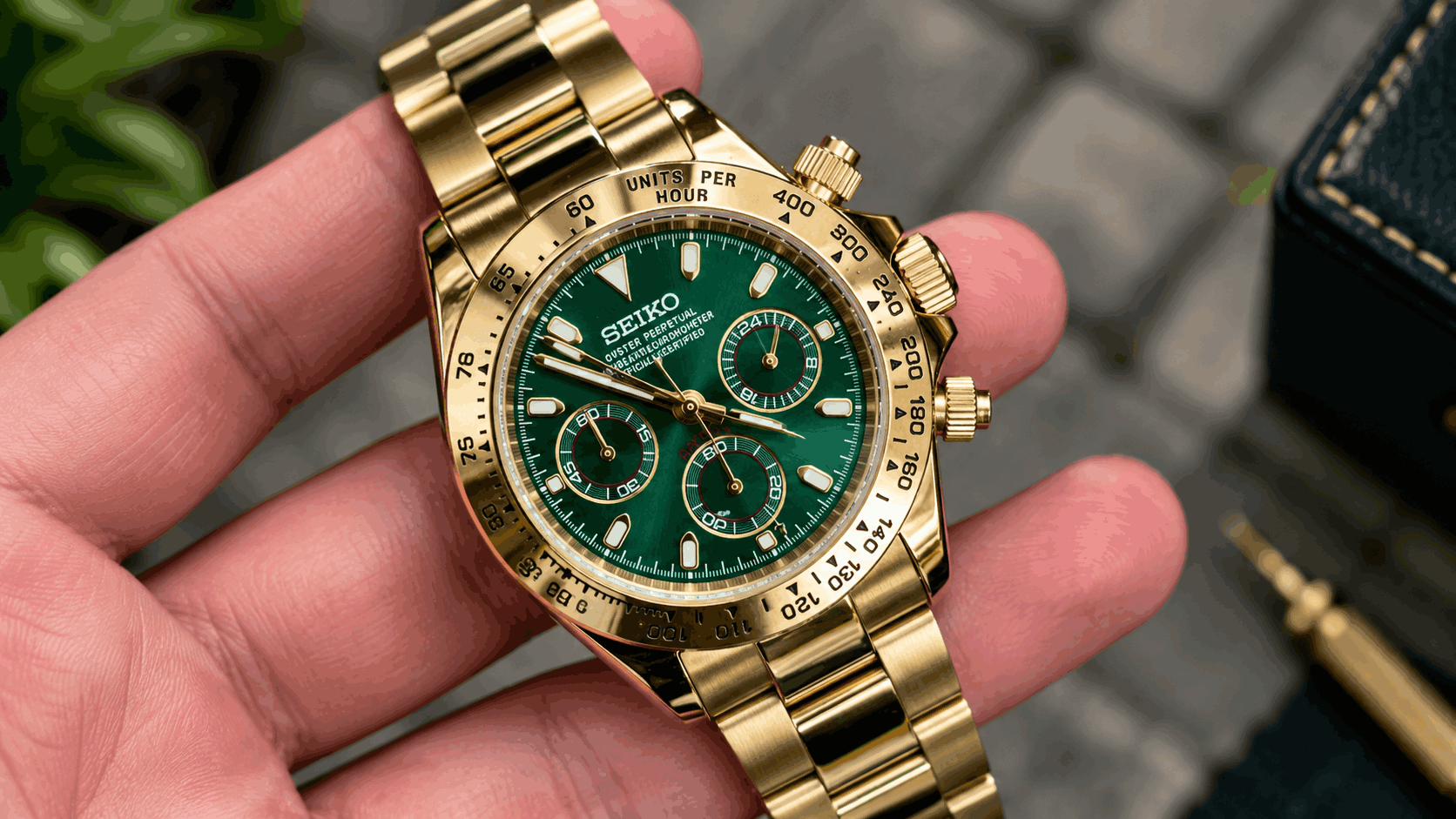
Wipe your Seiko mod down weekly, keep it away from magnets and hard knocks, check the water resistance once a year, and get the movement looked at by a watchmaker every 3-5 years.
At Chrono Customs, we build and sell Seiko mods for people who love this hobby as much as we do. Along the way, we've picked up a lot of knowledge about what keeps these watches running well for years. We're sharing that here so you get the most out of yours.
Why Bother With Maintenance at All?
A modded watch carries a bit more risk than a stock one. Aftermarket parts don't come with a factory warranty. Gaskets that get disturbed during a build don't always reseal perfectly. And the movement inside, usually an NH35, NH36, or similar Seiko caliber, still needs clean oil and a steady hand to keep ticking accurately.
None of this means your watch is fragile. Seiko movements are famously tough. But a little regular care goes a long way toward making sure your mod looks sharp and runs true for years, not just months.
The Small Daily Habits That Actually Matter
You don't need a whole routine. Just a few seconds of attention here and there.
Give it a wipe after you take it off. A soft microfiber cloth handles sweat, skin oils, and daily grime before they work their way into the gaps around the crown or crystal.
Keep it away from magnets. This one surprises people. Phones, laptop speakers, bag clasps, even some tablet covers — all of these can magnetize your movement without you noticing. A magnetized watch suddenly runs way too fast. Just keep a few inches of distance, and you're fine.
Don't let it bake or freeze. Leaving your watch in a hot car or right next to a radiator stresses the lubricants and seals inside. Cold can cause condensation to form inside the case. Room temperature is your friend here.
Screw that crown down. If your mod has a screw-down crown, use it. A loose crown is basically an open door for moisture and dust, especially if you're anywhere near water.
A Weekly Clean-Up (It Takes Five Minutes)
The Case and Bracelet
Mix a little mild soap into lukewarm water. Grab a soft toothbrush, dip it in, and gently scrub the case sides, lugs, and bracelet links. Wipe everything down with a damp cloth, then dry it completely before you put the watch back on.
One caution: don't soak the watch unless you're sure it's still water resistant. Opening a case for a mod can quietly knock down that rating, even if everything looks fine on the outside.
The Crystal
Fingerprints and dust love crystals. Grab a lens cloth — the kind made for glasses or camera lenses- and wipe in small circles. If there's something stubborn stuck on there, add a single drop of water to the cloth first.
Skip the paper towels and tissues. They feel soft, but they can leave fine scratches on acrylic and mineral crystals over time.
Between the Bracelet Links
Dirt loves to hide here, and it's usually what causes that annoying squeak. A soft brush or a piece of dental floss works wonders for clearing it out. Rinse, then dry each link by hand.
Taking Care of What's Inside
The movement is the heart of the watch, and it asks for the least day-to-day fuss — but it does need a long-term plan.
Wind it at the same time each day if you're running a manual or hand-wound caliber. Stop as soon as you feel a little resistance. Push past that point, and you risk damaging the mainspring.
Wear your automatic enough to keep it wound. Aim for at least 8 hours a day on your wrist. If you've got a small collection and rotate watches, a watch winder set to the right rotation count for your caliber works great too.
Be gentle with it. A hard knock or a drop can jolt the balance wheel out of position, which throws off your timekeeping and might mean a trip to a watchmaker.
Plan for a professional check every 3 to 5 years. The oil inside dries out over time, and dry oil means more friction between tiny moving parts. A qualified watchmaker can clean everything out, re-oil it, and get your timing back on point.
Is It Actually Water Resistant? Here's How to Know
Honestly, water resistance is the one thing we see people get wrong most often with Seiko mods.
Just because the parts are rated for water resistance on paper doesn't mean your specific watch still holds that rating after a case gets opened.
A few rules that'll save you some heartache:
- Get a pressure test done after any case work. A local watchmaker can check the seal without dunking your watch in a tank.
- Ask about fresh gaskets whenever the case gets opened. They harden and compress over the years, and fresh ones make all the difference.
- Rinse off saltwater or chlorine as soon as you can. Both wear down seals faster than regular fresh water does.
- Never touch the crown while you're underwater. That's the fastest way to let water sneak in.
If you're not 100% sure what your watch can handle, just treat it as splash-resistant only. It's a simple rule, and it'll save you from a very bad day.
Storing It When You're Not Wearing It
Use a watch box or a soft pouch. Keeps dust and scratches away.
Keep humidity under control, ideally below 50%. Humid air speeds up corrosion on steel parts.
Keep it out of direct sunlight. UV rays can fade dials and discolor certain straps faster than you'd expect.
Store automatics flat, or use a winder. It keeps the lubrication distributed evenly instead of pooling in one spot.
Mistakes We See All the Time
Changing the date in the danger zone. Most Seiko movements have a window — usually 9 PM to 3 AM — where adjusting the date can damage the mechanism. Move the hands past that window first.
Reaching for harsh chemicals. Alcohol, acetone, and heavy-duty solvents can strip the finish right off your case or bracelet. Mild soap and water really is all you need.
Brushing off small problems. If your watch is losing a few seconds a day or the crown feels gritty, that's your watch telling you something. Catch it early, and the fix is usually simple and cheap.
Going too tight during a build. Cranking down case screws or crystal retaining rings with too much force can crack parts or squeeze gaskets unevenly. Snug is enough.
When It's Time to Call in a Pro
Some things really are best left to a trained watchmaker. Find one near you if:
- Your watch is gaining or losing more than a few seconds a day
- You spot any moisture under the crystal
- The crown feels loose or wobbly
- You're planning to open the case for anything
- It's been more than 5 years since the movement was last checked
A good local watchmaker, or a trusted watch repair shop, can handle all of the above and keep your mod running the way it should.
Frequently Asked Question
Q. How often should I actually clean my Seiko mod?
A daily wipe-down plus a proper weekly clean covers most of it. That combo keeps sweat, dust, and oils from building up where they shouldn't.
Q. Can I go swimming with my Seiko mod?
Only if it's been pressure-tested since any modification was done, if you haven't had that check, play it safe and keep it splash-only.
Q. Why does my modded Seiko suddenly run fast?
Nine times out of ten, it's magnetism. Keep your watch away from phones and speakers, and a watchmaker can demagnetize it in just a couple of minutes.
Q. Does a modded Seiko need anything different from a stock one?
The core care routine is the same either way. The real difference is in the gaskets and case seal, since aftermarket parts don't always fit and seal the same way factory parts do. Pay closer attention to water resistance on a modded watch than you would on a stock one.
Find Your Next Seiko Mod
You put real thought into choosing this watch, so it's worth giving it real care in return. At Chrono Customs, we build and sell Seiko mod watches for collectors who want something that looks sharp, feels personal, and lasts for years.
Shop our best-selling Seiko Mod Watches, ask us a question about a piece you're eyeing, or see what's coming next. Your next favorite watch might already be waiting for you there.